EDR/XDR Solution
 Patch Management as a Service
 OT Security Services
 Zero Trust VPN Access
 PIM/PAM Solution
 Managed SOC Services
 Managed Data Loss Prevention
 MDR Services
 VAPT
 Social Engineering Assessment
 Red Team Assessment
 ESMA – Maturity Assessment
 Imperum



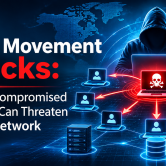
Cyberattacks rarely stop at the first system they compromise. In many cases, gaining access to a single account or device is only the beginning of a much larger attack. Once inside an organisation’s network, attackers often attempt to move from one system to another, searching for sensitive information, privileged accounts, critical infrastructure, and opportunities to expand their access.This technique, known as lateral movement, has become a significant challenge for modern cybersecurity teams. As enterprise networks grow more interconnected through cloud platforms, remote access technologies, identity systems, and third-party integrations, attackers have more opportunities to move across environments without immediately triggering security alerts.
Understanding how lateral movement works is essential for organisations looking to strengthen their cybersecurity posture and reduce the impact of compromised credentials.
What Is Lateral Movement in Cybersecurity?
Lateral movement refers to the techniques cybercriminals use to navigate across a compromised network after gaining initial access. Instead of remaining on the first system they infiltrate, attackers attempt to access additional devices, applications, servers, and accounts within the same environment.
The objective is often to gain higher privileges, identify valuable data, establish persistence, or reach critical systems that can be used to carry out the final stage of an attack.
For example, an attacker might initially compromise an employee’s workstation through a phishing email. From there, they could attempt to access shared folders, discover administrative credentials, connect to internal servers, and eventually reach systems containing financial information or customer data.
What begins as a single compromised endpoint can gradually become a network-wide security incident.
How Lateral Movement Attacks Typically Unfold
Lateral movement often occurs through a series of interconnected steps rather than a single action.
1. Initial Access
Attackers first gain access to an organisation’s environment through methods such as phishing, stolen credentials, exploited vulnerabilities, exposed remote access services, or compromised third-party accounts.
At this stage, the attacker may have access to only one user account or device.
2. Credential Discovery
Once inside, attackers attempt to identify additional credentials that could help them expand their access.
They may target password stores, authentication tokens, configuration files, browser credentials, or systems where privileged accounts have been used.
Compromised credentials are particularly valuable because they allow attackers to operate using legitimate authentication mechanisms.
3. Network Discovery
Attackers explore the internal environment to identify connected systems, user accounts, network shares, servers, and applications.
This reconnaissance helps them understand the network structure and identify potential targets.
4. Privilege Escalation
If the initial account has limited permissions, attackers may attempt to obtain elevated privileges.
Administrative access can provide greater control over systems, allow access to sensitive information, and make it easier to compromise additional devices.
5. Movement Across Systems
Using stolen credentials, remote administration tools, or existing network connections, attackers attempt to access other systems.
This may involve moving between workstations, servers, cloud environments, and identity infrastructure.
6. Reaching Critical Assets
The ultimate objective may be to access sensitive databases, financial systems, intellectual property, backup infrastructure, or security management platforms.
At this stage, attackers may prepare for data theft, ransomware deployment, business disruption, or other malicious activities.
Why a Single Compromised Account Can Become a Major Security Threat
Modern enterprise environments depend on interconnected systems. Employees regularly access multiple applications, cloud platforms, internal resources, and collaboration tools using the same identity.
While this connectivity improves productivity, it can also create opportunities for attackers.
Excessive Access Privileges
Employees and service accounts may have access to more resources than they actually need. If one of these accounts is compromised, attackers may inherit permissions that allow them to access multiple systems.
Weak Identity Security
Reused passwords, insufficient authentication controls, poorly managed privileged accounts, and inactive accounts can create opportunities for attackers to expand their access.
Unrestricted Network Connectivity
Flat network architectures allow systems to communicate with one another without sufficient restrictions. This can make it easier for attackers to move from one compromised device to another.
Limited Visibility Across the Network
Organisations may monitor endpoints, cloud applications, and network traffic through separate security tools. When these systems operate independently, suspicious activity across multiple environments can be difficult to identify.
Trust Between Systems
Enterprise environments often contain trusted connections between applications, servers, and services. Attackers may exploit these relationships to access systems without generating obvious signs of malicious activity.
Common Techniques Used for Lateral Movement
Cybercriminals frequently use legitimate tools and technologies to move through compromised environments.
Some common techniques include:
Credential Theft: Obtaining passwords, authentication tokens, or other credentials to access additional systems.
Remote Services Abuse: Exploiting legitimate remote access technologies, such as Remote Desktop Protocol (RDP), SSH, or administrative services.
Pass-the-Hash Attacks: Using stolen password hashes to authenticate to other systems without knowing the original password.
PowerShell Abuse: Using legitimate scripting capabilities to execute commands, gather information, or interact with other systems.
Remote Administration Tools: Abusing tools designed for system administration to access and control additional devices.
Exploitation of Vulnerabilities: Taking advantage of security weaknesses in internal systems to gain access to other devices or elevate privileges.
These techniques can be difficult to distinguish from legitimate administrative activity, particularly when attackers use valid credentials and trusted system utilities.
Why Traditional Security Measures May Miss Lateral Movement
Traditional security strategies often focus on preventing initial access through firewalls, antivirus software, email security, and endpoint protection.
While these controls remain important, they may not always detect suspicious activity once an attacker has successfully entered the network.
An attacker using legitimate credentials may not trigger traditional malware detection systems. Similarly, an authorised remote access tool may appear harmless when viewed in isolation.
The challenge becomes greater when security teams receive large volumes of alerts from different systems. A suspicious login, unusual file access, and unexpected remote connection may each appear insignificant individually. However, when analysed together, they could reveal a coordinated attack.
This highlights the importance of contextual threat detection, continuous monitoring, and correlating activity across the entire security environment.
How Organisations Can Detect and Prevent Lateral Movement
Preventing lateral movement requires a combination of identity security, network architecture, endpoint monitoring, and effective incident response.
Implement Least-Privilege Access
Users, applications, and service accounts should only have the permissions required to perform their specific tasks. Reducing unnecessary privileges limits the potential damage caused by compromised accounts.
Strengthen Identity Security
Multi-factor authentication, privileged access management, credential protection, and regular access reviews can help reduce the risk of attackers abusing compromised identities.
Segment Networks
Network segmentation restricts communication between different systems and environments. Separating critical infrastructure, sensitive databases, user devices, and administrative systems can make it more difficult for attackers to move freely.
Monitor Endpoint and Network Activity
Organisations should monitor unusual login patterns, unexpected remote connections, suspicious privilege changes, abnormal data access, and activity involving administrative tools.
Correlate Security Events
Connecting information from endpoints, identity systems, network infrastructure, cloud platforms, and security tools can help security teams identify attack patterns that might otherwise remain hidden.
Automate Detection and Response
Automated security workflows can help investigate suspicious activity, enrich alerts with contextual information, prioritise threats, and trigger appropriate response actions.
This can reduce the time between detecting suspicious behaviour and containing a potential threat.
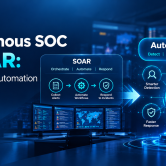
The Role of Security Automation in Detecting Lateral Movement
As cyberattacks become more sophisticated, security teams must investigate threats across increasingly complex environments.
Security automation can help improve the speed and consistency of these investigations by connecting alerts, identifying suspicious relationships between events, and reducing repetitive manual tasks.
For example, when a potentially compromised account attempts to access multiple systems, automated workflows can correlate authentication events, endpoint activity, and network connections to provide security analysts with a clearer picture of the incident.
Depending on the organisation’s security policies, automated response mechanisms may also help isolate compromised endpoints, disable suspicious accounts, or initiate incident response procedures.
Automation does not replace human expertise. Instead, it enables security teams to focus their attention on complex investigations, strategic decisions, and threats requiring deeper analysis.
The Role of Managed SOC Services in Detecting Lateral Movement
As cyberattacks become more sophisticated, organisations must investigate threats across increasingly complex environments.
Managed SOC services provide continuous security monitoring, threat detection, investigation, and response capabilities that help organisations identify suspicious activity across endpoints, networks, cloud environments, and identity systems.
A well-structured security operations approach combines security technologies, threat intelligence, skilled analysts, and proactive monitoring to identify threats before they escalate.
For example, when a potentially compromised account attempts to access multiple systems, security analysts can investigate authentication events, endpoint activity, and network connections to determine whether the behaviour represents a legitimate activity or a potential attack.
By correlating security events and identifying patterns of suspicious activity, security operations teams can improve visibility into potential lateral movement and support faster incident response.
Organisations seeking to strengthen their security operations can explore managed SOC services to improve their ability to continuously monitor, detect, investigate, and respond to cybersecurity threats.
How AI and Security Automation Can Strengthen Threat Detection
The growing complexity of enterprise networks and increasing volume of security alerts have created challenges for traditional security operations.
Artificial intelligence and security automation can help security teams analyse large volumes of security data, identify unusual behavioural patterns, and prioritise potentially significant threats.
AI-driven threat detection can help identify suspicious activities such as:
- Unusual login patterns and authentication behaviour.
- Unexpected access to sensitive systems.
- Abnormal connections between devices.
- Suspicious privilege escalation attempts.
- Unusual data access or movement.
- Potentially compromised user accounts.
When integrated with security operations workflows, automation can help enrich alerts, correlate security events, and support faster investigations.
However, AI and automation should complement human expertise rather than replace it. Security analysts remain critical for validating complex incidents, understanding business context, and making informed response decisions.
The evolution towards autonomous SOC capabilities represents a shift towards more intelligent security operations, where repetitive investigation processes can be automated and security teams can respond to threats more efficiently.
Conclusion
Lateral movement demonstrates why cybersecurity cannot focus exclusively on preventing attackers from entering an organisation’s network. A compromised account, vulnerable endpoint, or exposed credential can become the starting point for a much larger attack.
As enterprise environments become more interconnected, organisations need stronger identity controls, effective network segmentation, continuous monitoring, and the ability to detect suspicious activity across multiple systems.
The ability to identify an attack early and prevent it from spreading can make the difference between a contained security incident and a widespread business disruption.
Cybersecurity is no longer just about keeping attackers out. It is about limiting their ability to move, identifying suspicious behaviour quickly, and protecting critical systems even when an initial compromise occurs.